
For the health and safety of our employees, raw food diets cannot be accommodated in the Hospital or Resort.
Trusting a boarding facility to take proper care of your cat while you're away can be daunting. Cats generally don't take to new and strange places and people very well, so boarding your cat may be a stressful occurrence for both you and your pet, especially if it's your first time doing so. However, with adequate preparation and planning, cat boarding can be a very positive experience and ensure it is a safe place to stay. The important thing is that you and the boarding facility are well-informed about your cat's needs and how to address them.
We have compiled a list of the most frequently asked questions regarding cat boarding so you will have a deeper insight into what it entails. If you are located near Birmingham, AL, our dedicated team of highly qualified veterinarians will be happy to answer any questions you may have. Don't hesitate to reach out at (205) 506-3569 if you have any immediate vaccination requirements or questions before boarding your cat.
What Should I Consider When Boarding My Cat?
The primary consideration for boarding is your and your cat's particular needs. If your cat suffers from any chronic conditions, it is vital that the boarding facility of your choice is able to cater to their requirements. Moreover, every cat has a unique personality and temperament and requires varying levels of socialization. If those needs aren't considered, boarding can become a very stressful experience for your cat. Therefore, you must consider how many other animals and people your cat will interact with while boarding and if that amount suits their personality. Overall, ensuring a boarding facility can satisfy your cat's individual needs should be at the top of your list of considerations.
What Are the Different Types of Boarding Options?
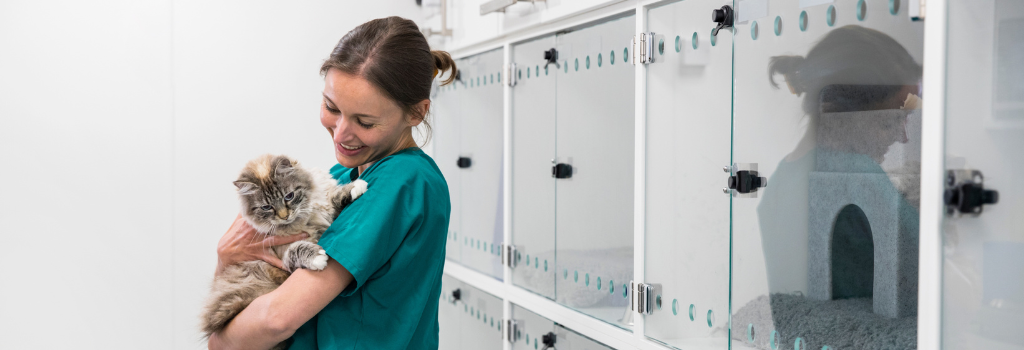
There are several boarding options to consider when you need to leave town. Firstly, you may choose to hire a dedicated pet sitter to take care of your cat in your home. This option is most appropriate if your cat cannot easily adapt to new environments. The second option is a boarding facility, where your cat will have the opportunity to interact and play with the staff. Cats that have a high need for social interaction and attention will do well in environments where dedicated staff members can satisfy the cat's need for a human-animal bond.
Several veterinary hospitals offer boarding facilities as well, so if your pet is used to visiting a particular establishment, it may be a suitable option. An environment that your cat is familiar with is typically the best boarding option, as they will adapt and integrate more smoothly. A veterinary hospital with boarding facilities is particularly favorable if your pet has medical conditions requiring special attention while boarding. However, your cat's individual characteristics should still be the determining factor in the best place to board them.
What Questions Should I Ask the Boarding Facility Before Boarding My Cat?
First and foremost, it is essential to establish the facility’s vaccine requirements and other general health parameters, including parasite testing, to ensure your cat is eligible to board. Below are some other important questions to ask a boarding facility that will assist in giving you a clear insight into the environment your cat will be boarding in:
- Do they include food? Most boarding facilities and kennels include your pet's daily meals, but if your cat has particular dietary requirements, you may want to bring your own cat food along.
- Will your cat be alone or with a staff member? Determining the amount of social interaction your cat will engage in while boarding is important. Although cats are typically satisfied being alone for long periods, some cats enjoy more social interaction than others. Therefore, it is important to find out how much individual attention will be dedicated to them.
- Are there extra services available, such as nail trimming? Cats generally don't require grooming services as much as their dog counterparts, but some pet owners prefer to have their nails trimmed regularly. Such additional services may be a priority for some cat parents.
- Will there be staff available onsite at all hours? Some cat boarding facilities are only supervised during normal business hours. It is important to determine the availability of staff members and whether or not it corresponds with your cat's needs and your comfort level as a pet owner.
- Will there be access to veterinary services? Some boarding facilities have veterinarians on site to see to your cat's wellness needs at all times, while others may have veterinarians on call around the clock. This question is particularly relevant if your cat suffers from a condition that requires continuous care.
- What does the daily schedule at the facility look like? Your cat's daily schedule at a boarding facility typically includes social interaction, level of activity, feeding times, and hours of solitude. This question will give you a better idea of how the facility's daily procedures align with your cat's regular schedule.
- What would happen in the case of an emergency? This question is crucial to understanding the competency of a boarding facility to respond appropriately to emergencies. An emergency could be anything from a crisis with your cat to a predicament at the facility itself. A good boarding facility will be able to provide you with a detailed outline of the procedures put in place for emergencies.
Will My Cat Receive Active Social Time While Boarding?
Although cats generally don't like socializing with unfamiliar pets, they will get some level of socialization from staff members. Depending on their preference, your cat may have the opportunity to snuggle with the staff and be active in a dedicated space. Some facilities allow pets from the same household to board together, ensuring they get all the socialization and playtime they may want. However, if any issues arise, there should be a plan in place to separate them.
Although your cat may have the opportunity to interact and play with the staff, if their temperament is on the shy side, they can explore their safe space on their own. The level of social interaction your cat will have the opportunity to enjoy depends on their individual needs, but an appropriate amount of exercise and activity will be provided.
What Do Boarding Facilities Need to Know About My Cat?
The most important thing a boarding facility needs to be informed about is any medical conditions your cat has. For instance, diabetic cats might be in a separate area where they are supervised more attentively, and your cat can only benefit from this if the facility is aware of their condition.
Moreover, ensure you thoroughly discuss any medications or supplements your cat is taking to ensure they receive all the necessary information to care for your feline properly. The facility must be aware of any dietary restrictions and requirements your cat may have to ensure they receive the appropriate food and treats while boarding.
Beyond your cat's state of health, gauging their temperament is also vital. Some cats enjoy attention and petting, while others prefer to be left alone. Your cat can only have a positive experience boarding if the facility knows what makes them happy. There may be other pets nearby that can potentially cause some anxiety in your cat, so informing the facility of your cat's general temperament is important to ensure they are not exposed to high-stress environments.
What Should I Bring, and How Should I Prepare When Boarding My Cat?
Your cat's medications, if applicable, are the most important thing to remember when preparing to board your cat. It is further essential to bring everything they need if they are on a special or prescription diet, as boarding facilities are generally happy to feed your cat according to your instructions. If your cat is not necessarily on a special diet but does have some difficulty adapting to a new food, it is advised to still bring your own food from home to prevent any GI upset in your cat.
If your feline is accustomed to certain amounts of food at designated times, consider prepackaging their food in zip lock bags containing the appropriate amount and provide the staff with clear instructions on feeding times so your cat is not subject to significant changes. Going hand-in-hand with diet and medication, you must provide the facility with any supplements your cat is taking to ensure nothing changes dramatically while your cat is boarding. Beyond such necessities, you can usually bring any blankets, beds, or toys your cat is particularly fond of to make them more comfortable in a new environment. Be sure to keep their scent on such items by not washing them, so your pet is surrounded by a measure of familiarity.
Is There Anything I Need to Know About Boarding at a Pet Hotel or Resort?
Most pet hotels and resorts offer more extensive options to optimize your cat's boarding experience. They may include elaborate playrooms and, in some cases, even entertainment options like TVs. Such facilities typically have species-specific areas where your cat isn't exposed to any stress-inducing factors, such as barking dogs. As with any boarding facility, it is important to inquire about the establishment's vaccination requirements and ensure their daily schedule is a good fit for your cat.
What Do Veterinarians Generally Recommend for Safe Boarding?
Most veterinarians recommend boarding your cat at a facility that has a veterinarian either onsite or on-call at all times. If your cat suffers from a medical condition that requires them to be supervised around the clock, it is recommended to board your cat at a facility with staff present 24 hours a day. Further recommendations include fully informing the facility of any occurrences that are normal and abnormal in your cat so they know what they should be keeping an eye on.
Vaccinations are another important consideration. Although some boarding facilities may not require your cat to be up to date on all vaccines, it is still recommended to get your cat fully vaccinated to prevent any unwanted diseases from spreading. Veterinarians recommend that your cat is on flea prevention so as not to bring home any unwanted pests. Overall, being honest with the boarding facility is highly recommended, as it ensures the caretakers are informed on the state of your cat and how to handle any situation optimally.
Is There Anything Else I Need to Know About Boarding at a Veterinarian's Office?
A veterinary hospital or clinic is a great place to board your cat, as pets are frequently monitored and supervised to ensure they receive the best medical care under normal circumstances and in the case of an emergency or health issue. Senior cats, in particular, often need to receive medications for chronic conditions frequently, and there is no better person to see to that than a dedicated veterinarian or technician. Another advantage of boarding your cat at a veterinary office is that you and your cat have an established relationship with your veterinarian, making it much easier to navigate medical records and requirements and guaranteeing the best possible care for your cat while you're away.
Boarding your cat doesn't have to be a stressful endeavor, and if the appropriate steps are taken, you can rest assured your feline is comfortable and happy while you're apart.
If you live in or near Birmingham, AL, and are looking for pet care, contact us at (205) 506-3569. Our staff would love to talk with you!
Don't forget to follow us on social media: Instagram.